Aug 2026 Talk 2026 Earth Science Frontier Academic Salon +
Geographic Environmental Change and Human Behavioral Responses
@ Lanzhou · Invited talk
Aug 2026 Conference 2026 Science & Intelligence Conference +
@ Beijing · Attended conference
Aug 2026 Keynote 4th Int. Conf. on Urban Science and Intelligence +
Cities That Feel: Sensing Human Responses to Environmental Change
@ Guangzhou · Keynote Speaker
Conference siteJul 2026 Conference 2026 Annual Conference of the Cartography & GIS Committee, GSC +
@ Nanchang · Conference organizer
Jun 2026 Session chair 4th China Digital Earth Conference +
@ Qingdao · Session convener: "GIS Fundamentals and Methods"
May 2026 Session chair 8th Workshop on Cartographic Theory & Methods +
@ Nanjing · Session convener: "Human–Computer Interaction and Map Visualization"
Apr 2026 Seminar LSGI & RILS Research Seminar, HK PolyU +
Understanding Geographic Environmental Change and Human Behavioral Responses Through Big Data Analytics
@ The Hong Kong Polytechnic University
Apr 2026 Invited talk South China Normal University · Invited talk +
@ Guangzhou
Apr 2026 Session chair 10th Young Earth Scientists Forum +
@ Guangzhou · Session convener: "Remote Sensing and GIS"
7 Apr 2026 Paper Indoor air purification to ease the health toll of wildfire smoke +

Global health benefits and cost-effectiveness of indoor air purification to mitigate PM2.5 from wildfire smoke
Published in Nature Health — quantifies the global health and economic gains of indoor air purification against wildfire PM2.5.
Read the paper2 Feb 2026 Paper Night light & expressed sentiment across Chinese cities +

Wavelength-specific urban nighttime light modulates expressed sentiment across China
Published in Nature Cities — shows how the colour of city night light shapes expressed sentiment.
Read the paperNov 2025 Keynote 20th Annual Conference on GIScience: Theories & Methods +
Geographic Environmental Change and Human Behavioral Responses from Big Data Analysis
@ Xiamen · Keynote speech
Nov 2025 Forum 441st Shuangqing Forum (Young Scholars) +
AI and Complex Earth Systems: Fundamental Theory, Key Technologies, and Scientific Frontiers
@ Beijing
Oct 2025 Lecture Guest lecture, "Seminar on Human Geography" course, Peking University +
Causal Identification of Geographic Human–Land Systems from Big Data
@ Peking University
Oct 2025 Conference 2025 Annual Conference of the Ecological Society of China +
@ Wuhan · Attended conference
Oct 2025 Conference 2nd Conference on GIS Education +
@ Wuhan · Attended conference
Oct 2025 Conference 3rd National Symposium on Data-Driven Geoscience Development +
@ Zhuhai · Attended conference
Oct 2025 Paper Rising temperatures degrade global sentiment unequally +
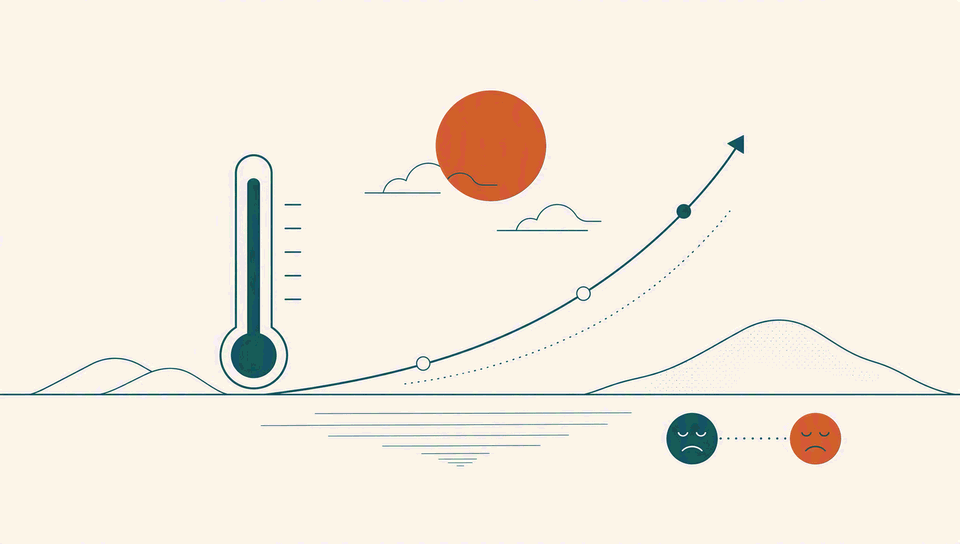
Unequal impacts of rising temperatures on global human sentiment
Published in One Earth — warming erodes expressed well-being, and some populations bear far more of the burden.
Read the paper11 Aug 2025 Paper Projecting heat-related mortality in Europe +

Future heat-related mortality in Europe driven by compound day-night heatwaves
Published in Nature Communications — projects European heat mortality under compound day-and-night heatwaves.
Read the paper16 May 2025 Paper Indoor wildfire-PM2.5 exposure and who pays to clean the air +
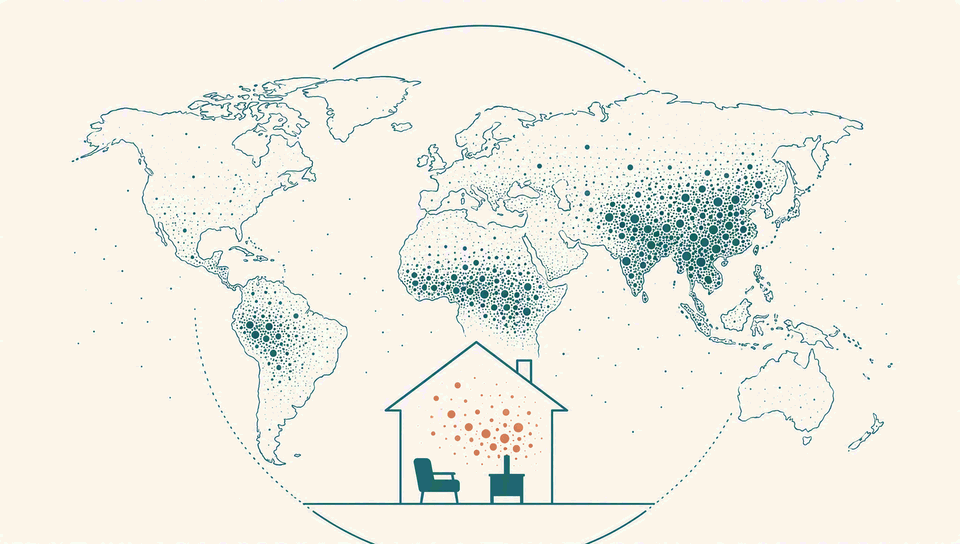
Global Disparities in Indoor Wildfire-PM2.5 Exposure and Mitigation Costs
Published in Science Advances — quantifies unequal exposure to indoor wildfire fine particles and the costs of cleaner air.
Read the paper